How it started
It all started in 2019.
Like many classical musicians, we suffer from a occupational hazard: when listening to other ensembles, we inevitably start comparing them. Who has the best sound? The sharpest rhythm? The most impressive career?
One day we were talking about those old car cards where players compare statistics and the fastest or strongest car wins the round. What if you did the same thing with string quartets?
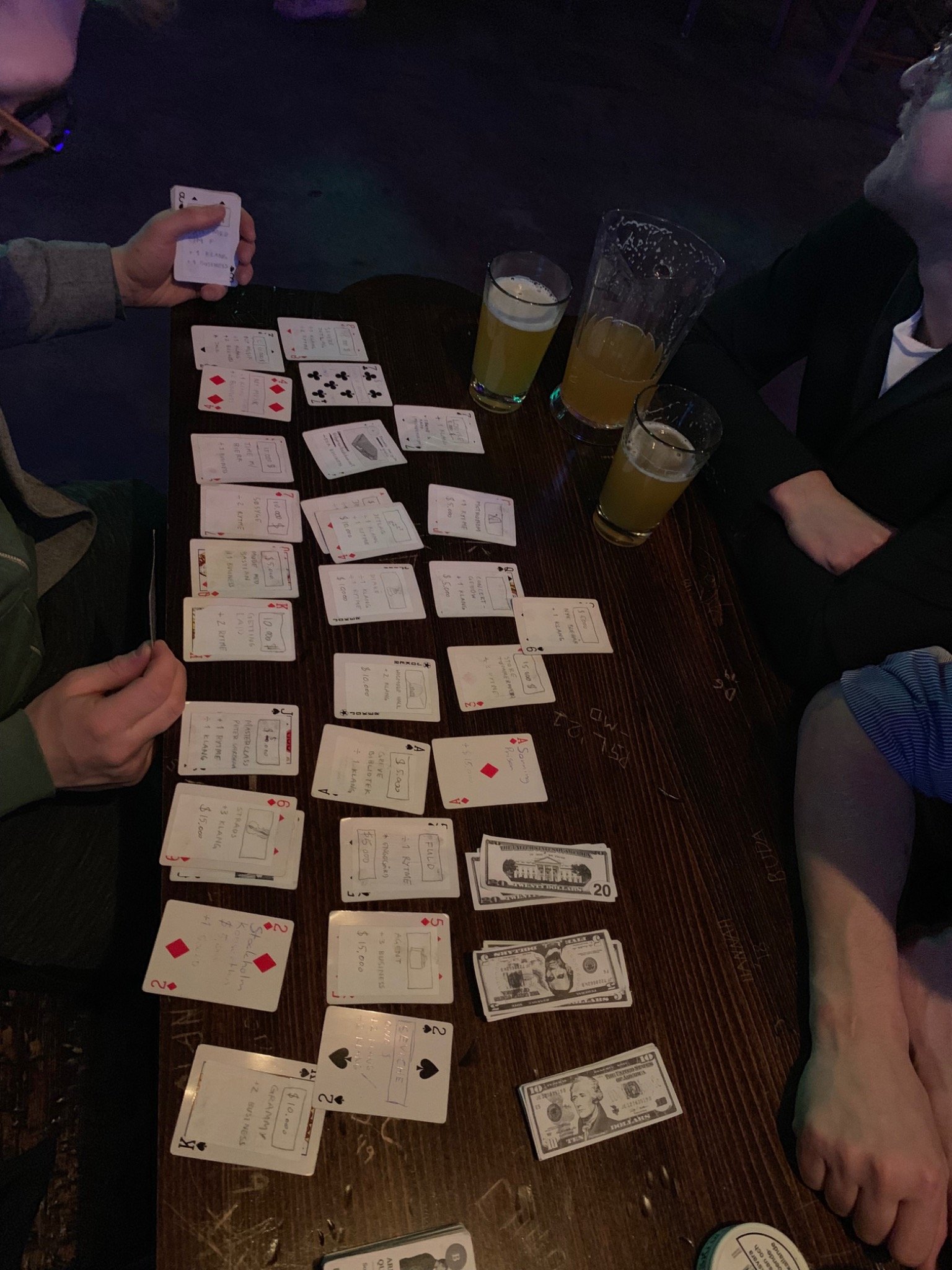
The idea grew on us, and the next day we rushed to the local game store and bought a deck of playing cards. We quickly made some stickers with different ensembles and gave them points in three categories: Sound, Rhythm, and Business. All of a sudden, we had a very simple ranking game to play.
Soon the game began to grow. We needed a way to stop the strongest ensembles from winning every round, so we experimented with costs and balancing systems. New ideas kept appearing. Cards inspired by real touring experiences found their way into the deck: a broken wrist, diarrhea before a concert, visa issues, and so on. It worked well.
After the initial playtesting phase, a wise friend advised us to remove the money element from the game. His philosophy was that good games should be simple and not overloaded with mechanics.
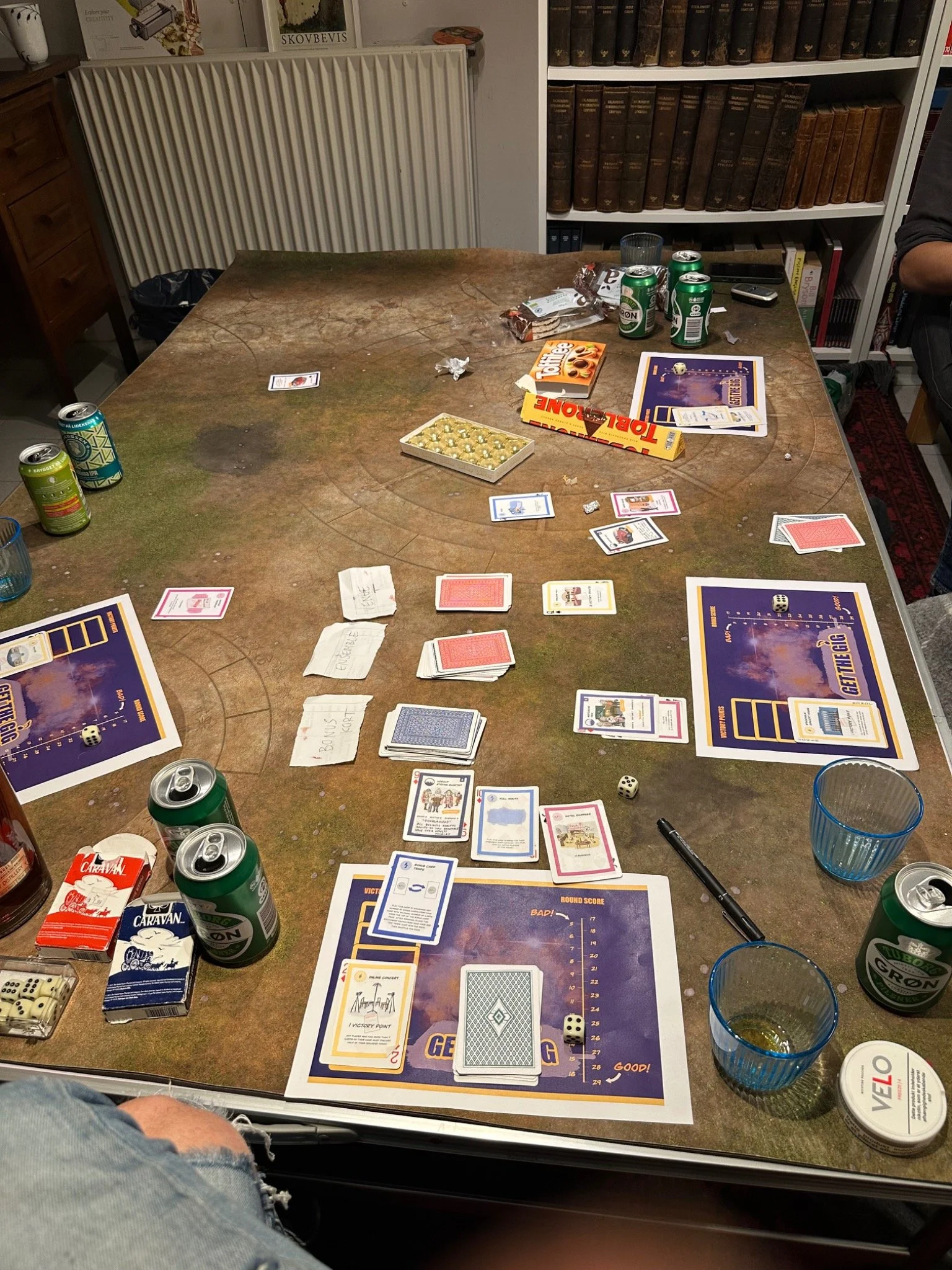
That decision led to the tier system, unique ensemble abilities, and eventually venues. Suddenly players weren't just comparing ensembles anymore - they were competing for a concert at a specific venue.
And just like that, we had a title: Get the Gig.
At first the game featured real-life string quartets. We still have those rankings safely hidden away. However, we quickly realised that publishing a card game in which your colleagues could officially lose to each other might not be the best career move. So we invented our own ensembles instead.
Over the years the artwork took shape, the rules evolved, and the game grew into something bigger than the handful of cards we started with in a hotel lobby in Santa Barbara.
It only took seven years.